
 |
 |
 |
 |
 |
 |
 |
Courses offered by Sophia Reinders at the California Institute of Integral Studies

The Body in the Transformation of Consciousness -
Awakening Joy at the Heart of Being.
"Nature never gives up on us. The earth's wild, primal elegance calls deep inside us to explore that sacredness, that untamed beauty and mystery."
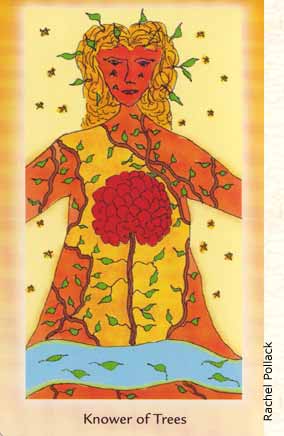 The rainbow of our experiencing, our psyche, is embedded in the life of our body. Our body is our most immediate home on earth. Here live our stories, our joys, fears and hopes, sculpted in the flesh of our being. Our body is as well the guardian of our insights and intuitions, of our longing-to-become, and of our celebration of life on earth.
When we give a creative voice to the body in the healing of the psyche, our mental-emotional transformation is supported, sustained and shared by our life force and we grow both physically and emotionally into a freer range of motion and emotion, awakening new, cherished possibilities for well-being, serenity and joy.
In this course, you will engage body, mind, emotions and imagination in creative practices such as expressive movement, kinesthetic awareness practices, active imagination as dialogue with the body, poetic writing, enactment and painting. You will reflect on the role of the body in psychotherapy and explore skills and practices to attend empathically to the movement of joyful transformation in self and other.
Dreaming the Soul – Dancing the Dream:
Jungian Dream Work, the Body and Expressive Arts.
 For Jung, psyche reveals itself in its creative images which beckon us to befriend the intuitive wisdom they offer, guiding and nurturing us towards greater balance and wholeness. In the images of our night world we witness the mysteries of the soul. Dreams, Jung says, are messengers of meanings that are embodied and inscribed in the images themselves. As we explore dream images creatively and attune ourselves to the imagistic qualities of their shapes and colors, their volumes, movements and rhythms, they disclose new insights and evoke rich intuitive resonances, while they remain rooted in their fertile, imaginal ground.
This course offers a reflective and a creative, embodied exploration of dream work from a Jungian perspective, as a process of befriending the soul. Students will engage the images of their night worlds with creative practices such as movement and painting, enactment, story-making and active imagination through the body. They will dance their dreams to discover, befriend and harvest the dream’s messages for growth, transformation and healing.
of Jungian Psychology and Ecopsychology.
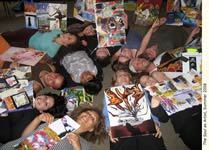 Images and their generative power lie at the heart of our being. They are the essence of psyche, or soul. Their timeless language is deeply inscribed in our embodied being and in the living fabric of our relationships between self and other, psyche and matter, body and world.
Soul and creativity are not limited to the human realm. They reside in the very fabric of the web of life with its radical mysterious openness, and in the human find expression in the images of the archetypal psyche.
The non-verbal or poetic language of the Expressive Arts invites us to give embodied creative expression to the soul’s images which beckon dormant or barely seen aspects of experience to awaken into awareness and burst open as seeds of transformation. Made tangible in creative form, the expressions of our experience shape and enrich the tapestry of our participatory awareness. They reawaken and deepen our embodied capacities for joyful belonging, and for celebratory engagement in the shared mystery of being within the web of life, into which we are inextricably interwoven.
Reawakening the Wild Heart of Being.
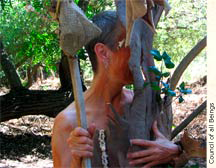 From deep within our perceiving, sensing, feeling and imagining body arises the knowing of our intimate indwelling within the earth body.
It is through the body that we participate in the intimacy of being. Our experiencing body with its imagistic capacity is the portal into a lived knowing of the elemental communion which Merleau-Ponty calls the “flesh of the world”. The words of John Seed, ecologist and rainforest activist, echo this felt sense of the mutuality and interchangeability of being: “Every atom in this body existed before organic life emerged 4000 million years ago. Remember our childhood as minerals, as lava, as rocks? Rocks contain the potentiality to weave themselves into such stuff as this. We are the rocks dancing.” (1988, p. 36).
The body, with its perceptions and gestures, is also the prima materia of the creative act, making Expressive Arts a privileged instrument for the deepening and the expression of our communion with the living earth.
Students in this course will engage in creative expressive modalities to evoke and celebrate an embodied, earth-embracing consciousness. These practices will unfold within an exploration of the growing field of ecopsychology and its urgent appeal to develop an ecological Self..
Ecospirituality and Creative Expression -
Touching the Sacred Within and Without.
"Spirituality is a mode of being in which not only the divine and the human commune with each other, but we discover ourselves in the universe and the universe discovers itself in us."
Thomas Berry
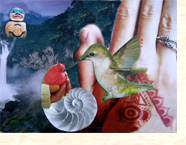 How do we recognize ourselves more deeply as woven into the fabric of the living earth, in which spirit and matter take form in the unfathomable dance of being? Enlivening and embodying our deepest spiritual apprehensions of the cosmos and our place in it might be our most urgent task indeed. As Fridjoff Capra expresses it: “Our Buddhism is ecological awareness”.
Our most intimate link with the living landscape is embedded in our breath and in our senses. It is here that we experience the reciprocity between our bodies and the body of the earth in its vital immediacy.
Our senses take us to the threshold of the sacred as the depth of the sentient. The creative gesture, in response, may express, renew and celebrate the sacred mystery at the heart of Being.
Yoga as Psychospiritual Practice I:
The Art of Awareness
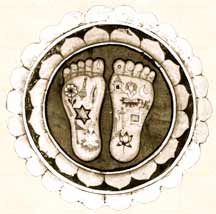 Ancient Eastern Wisdom Traditions see the body as a sacred instrument of the Spirit and a vessel of transformation. The tool for this transformation is yoga, revealed and sanctified by Lord Shiva. At the center of this course lies the practice of asanas (yoga postures), breath work (pranayama) and meditation. These yogic disciplines will be approached as an embodied practice of attention, awareness, mindfulness and kindness. This practice, in turn, leads to an embodied process of transformation resulting in a greater degree of integration of the experience of body, emotions, mind, and spirit. The asanas of the practice sessions will cluster around different aspects of the body mind, such as exploring and extending the spine, opening the hips, opening chest and heart, releasing the shoulders, exploring the energy flow within the body, and encountering the emotions as they are released from the body.
The practices of this course will bring greater presence, flexibility, strength and spontaneity to the body as felt and greater awareness of the body as instrument of the spirit. In practicing yogic postures with awareness, students will experience a shift in attitude towards - and consciousness of - the body as both personal and transpersonal dimensions of our life through which we give form and expression to the shared mystery of being.
Yoga as Psychospiritual Practice II:
The Art of Breathing
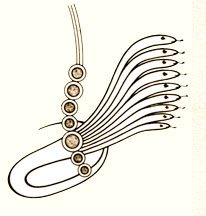 In the Indo-European languages, the words for "breath" often also denote "spirit" or "psyche". In the sacred scriptures of Hinduism, the breath is an external aspect, a form of manifestation of prana , the universal life force that interpenetrates and sustains all life. To the yogin, the breath is a constant reminder of the truth that we are identical with the great Life of the cosmos.
At the center of this course lies the academic, meditative-reflective and experiential exploration of the breath and the experience of breathing. The ability to concentrate on the breath and to engage in breathing with full awareness is supported by and embedded in the practice of asanas (yoga postures) which open chest and back, tone the diaphragm and the abdomen and create greater flexibility in shoulders and upper spine. The practices of this course will increase the ability to develop and sustain the embodied awareness of different dimensions of experience. They will enliven the felt sense of presence and spontaneity, of flexibility and strength. Students will enhance their ability to direct their attention, to explore the energy flow within the body, and to encounter and integrate the emotions as they are evoked through the practices and brought to awareness.
The ability to sustain a centered breathing pattern fosters the experience of attunement to the life force as it circulates in the body. It strengthens, calms and balances the body-mind as it is subjectively experienced and brings awareness to the body as instrument of the spirit.
This course is at once appropriate for students who wish to deepen and expand their practice as a sequel to "Yoga as Psychospiritual Practice I - The Art of Awareness" and for students who wish to begin their personal exploration of this psychospiritual practice.
Yoga as Psychospiritual Practice III:
Posture and Poise - The Art of Stillness
Yoga as Psychospiritual Practice III:
Posture and Poise - The Art of Stillness
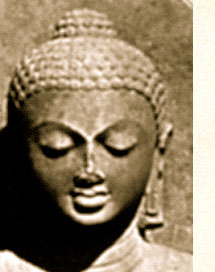 At the heart of every movement in body, thoughts and emotions lies a vibrant stillness.When we come home into our body, let the attention settle in the breath and immerse ourselves in a sensate, felt mode of discovering and exploring the patterns of our movements, we can experience a deep sense of vibrant stillness. In this open awareness, we can explore patterns of movement within the breath, the body and consciousness.
Practicing asanas within this spacious stillness allows the body to be alive with its own intelligence, its own ways of knowing, and transforms every asana into a dance of internal motion which radiates from the inside out as we yield to it. At the center of this course lies the academic, experiential and meditative-reflective exploration of stillness as the dynamic quality at the heart of movement in body, mind and spirit, given form and deepened through the practice of asanas, breath work and chanting. Cultivating stillness as vibrant presence leads to a mind which is spacious and peaceful, and a heart which is wide and joyous.
This course is at once appropriate for students who wish to deepen and expand their practice as a sequel to ãYoga as Psychospiritual Practice I and II and for students who wish to begin or continue their personal exploration of this psychospiritual practice.
Sophia Reinders, PhD, MFT, REAT
(415) 931-9507
Contact: sophia@wisdombody.com
3527 Sacramento Street |
21 Tamal Vista Blvd., Suite 218 Corte Madera, CA 94925 |